
Contact us
We will resolve your inquiry within 24 hours.
Difference Between OTC and Prescription Medicines: A Complete Guide for Patients
Introduction
Understanding the Difference Between OTC and Prescription Medicines is essential for safe and effective treatment. Whether you’re managing a minor illness or a chronic condition, knowing which medicine to use—and when—can significantly impact your health outcomes.
At SHOBHIT MEDIWORLD, we emphasize proper guidance and hospital pharmacy management practices to ensure patients receive the right medications at the right time.
What Are OTC Medicines?
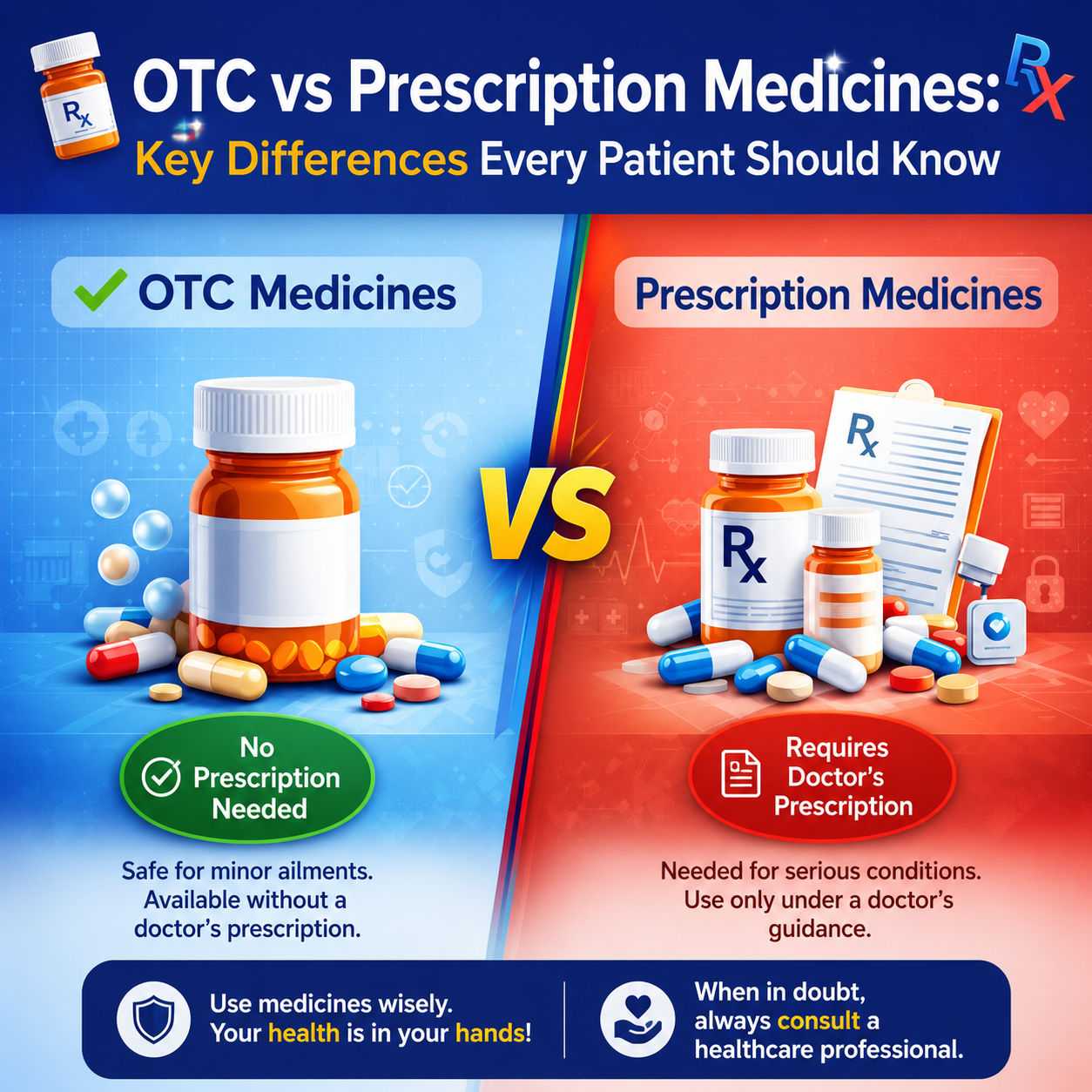
Over-the-counter (OTC) medicines are drugs that you can purchase without a doctor’s prescription. These medications are considered safe for public use when taken as directed.
Common Examples of OTC Medicines:
- Paracetamol (for fever and pain)
- Antacids (for acidity)
- Cough syrups
- Antihistamines (for allergies)
Key Features:
- Easily available at pharmacies
- No prescription required
- Used for minor health conditions
- Lower risk when used correctly
OTC medicines are widely used in retail and hospital pharmacy management systems to ensure accessibility and affordability.
What Are Prescription Medicines?
Prescription medicines are drugs that require authorization from a qualified doctor. These medications are typically used for serious or chronic conditions and need professional supervision.
Common Examples:
- Antibiotics
- Blood pressure medications
- Diabetes medicines
- Strong painkillers
Key Features:
- Must be prescribed by a doctor
- Used for specific medical conditions
- Higher risk if misused
- Require dosage monitoring
In a proper hospital pharmacy management system, prescription drugs are strictly regulated and tracked.
Difference Between OTC and Prescription Medicines
| Factor | OTC Medicines | Prescription Medicines |
|---|---|---|
| Availability | Easily available | Doctor’s prescription required |
| Usage | Minor illnesses | Serious/chronic diseases |
| Safety | Generally safe | Needs supervision |
| Cost | Usually lower | Can be higher |
| Regulation | Less strict | Highly regulated |
Importance of Proper Medication Use
Understanding the Difference Between OTC and Prescription Medicines helps avoid:
- Drug misuse
- Overdose risks
- Antibiotic resistance
- Adverse drug reactions
This is why modern hospital pharmacy management focuses on patient education and drug monitoring systems.
Risks of Misusing OTC Medicines
Even though OTC drugs are easily available, misuse can cause:
- Liver damage (excess paracetamol)
- Drug interactions
- Masking serious conditions
Risks of Using Prescription Medicines Without Guidance
Taking prescription drugs without a doctor’s advice can lead to:
- Severe side effects
- Dependency (in painkillers)
- Incorrect treatment
Role of Pharmacists in Medication Safety
Pharmacists play a critical role in:
- Guiding OTC medicine usage
- Verifying prescriptions
- Preventing drug interactions
Efficient hospital pharmacy management systems ensure that pharmacists maintain proper records and patient safety.
Tips for Safe Medicine Use
- Always read labels carefully
- Follow dosage instructions
- Never mix medicines without advice
- Store medicines properly
- Consult a doctor if symptoms persist
Conclusion
The Difference Between OTC and Prescription Medicines lies mainly in their usage, regulation, and safety levels. While OTC medicines are suitable for minor issues, prescription drugs require medical supervision.
At SHOBHIT MEDIWORLD, we prioritize safe dispensing through advanced hospital pharmacy management systems to ensure every patient receives proper care.