
Contact us
We will resolve your inquiry within 24 hours.
Introduction
Over-the-counter (OTC) medicines play a vital role in everyday healthcare. These medications allow individuals to treat common health issues without needing a doctor’s prescription. Understanding what OTC medicines are, how they work, and when to use them is essential for safe self-care.
In today’s fast-paced world, OTC drugs provide quick relief for minor illnesses, making them an important part of modern healthcare and hospital pharmacy management systems.
What is OTC Medicines?
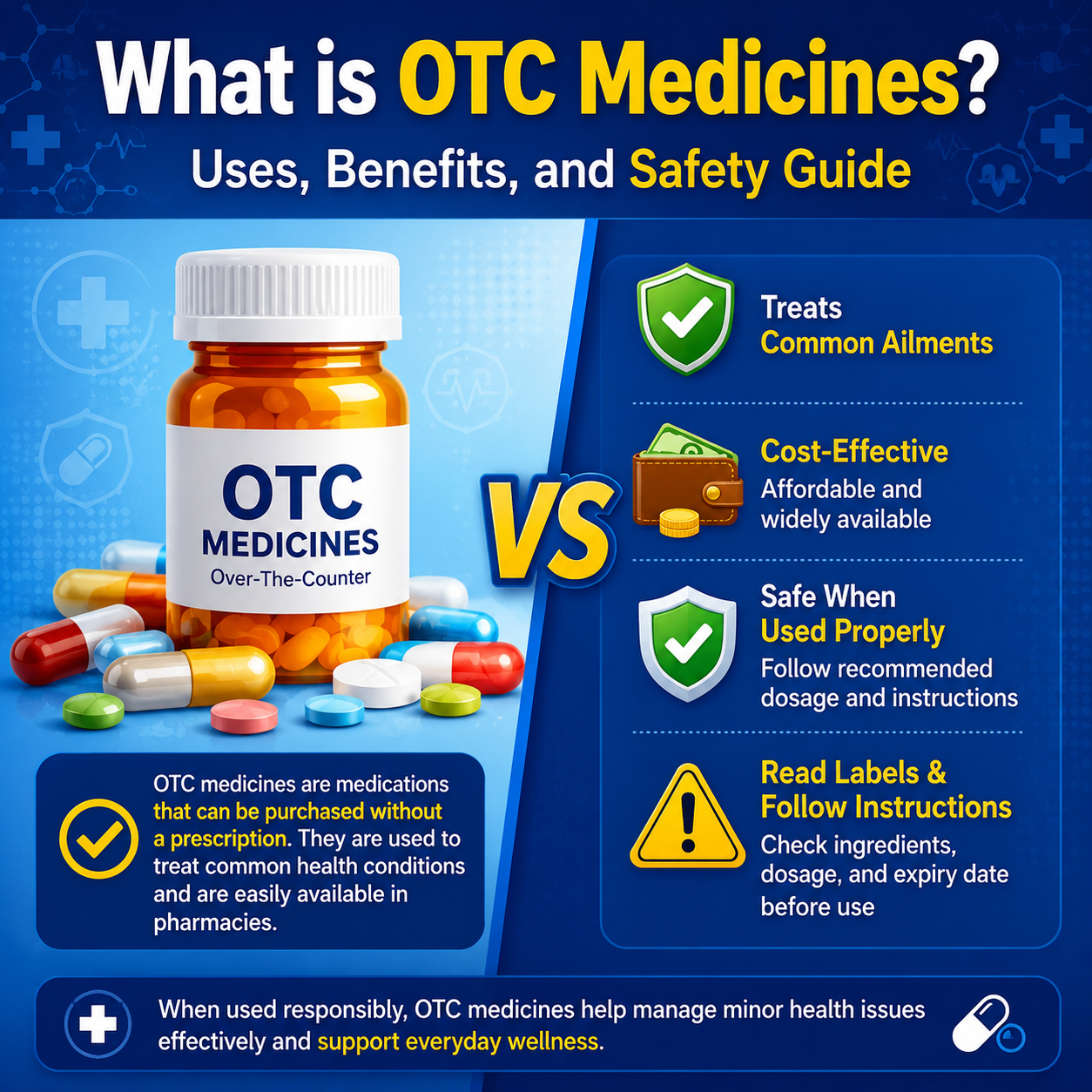
OTC (Over-the-Counter) medicines are drugs that can be purchased directly from a pharmacy without a prescription. These medicines are approved by regulatory authorities as safe for use by the general public when taken as directed.
They are commonly used for treating:
- Fever
- Headache
- Cold and cough
- Allergies
- Minor digestive issues
Common Examples of OTC Medicines
Some widely used OTC medicines include:
- Paracetamol for fever and pain
- Antacids for acidity
- Antihistamines for allergies
- Cough syrups for cold
These medications are easily available and form a major part of primary healthcare access.
Benefits of OTC Medicines
1. Easy Accessibility
OTC medicines are available without a prescription, saving time and effort.
2. Cost-Effective
They are generally more affordable compared to prescription drugs.
3. Quick Relief
Ideal for minor health issues that do not require medical supervision.
4. Supports Self-Care
Encourages individuals to manage basic health conditions independently.
Role in Hospital Pharmacy Management
In a well-structured hospital pharmacy management system, OTC medicines are:
- Properly stocked
- Easily accessible
- Clearly labeled
- Safely dispensed
Pharmacists ensure that patients understand correct usage and dosage, reducing the risk of misuse.
Risks of OTC Medicines
Although OTC drugs are safe, improper use can lead to:
- Overdose (especially painkillers)
- Drug interactions
- Masking serious health conditions
- Allergic reactions
This is why it’s important to follow instructions carefully.
Safe Usage Tips
- Always read the label and instructions
- Do not exceed recommended dosage
- Avoid mixing multiple medicines without advice
- Consult a pharmacist if unsure
- Store medicines properly
When to Avoid OTC Medicines
You should avoid self-medication if:
- Symptoms persist for more than a few days
- You have chronic conditions
- You are pregnant or elderly
- The condition worsens
OTC Medicines vs Prescription Medicines
While OTC drugs are useful, they are not suitable for all conditions. For a deeper understanding of how prescription medicines differ from OTC drugs, it is important to explore their regulation, usage, and safety requirements.
Importance of Awareness
Educating patients about OTC medicines helps:
- Prevent misuse
- Improve treatment outcomes
- Reduce healthcare costs
- Support better pharmacy practices
Conclusion
OTC medicines are a convenient and effective solution for minor health problems. However, responsible use is essential to avoid risks and ensure safety.
With proper awareness and guidance from pharmacists, OTC medicines can significantly improve everyday healthcare while supporting efficient hospital pharmacy management systems.