
Introduction
In every hospital setup, the pharmacy acts as the backbone of patient care by ensuring the safe, accurate, and timely delivery of medicines. However, many hospital pharmacies still operate with inconsistent workflows, undocumented systems, and staff-dependent processes. These gaps often result in dispensing mistakes, stock mismatches, billing errors, compliance issues, and audit-related risks.
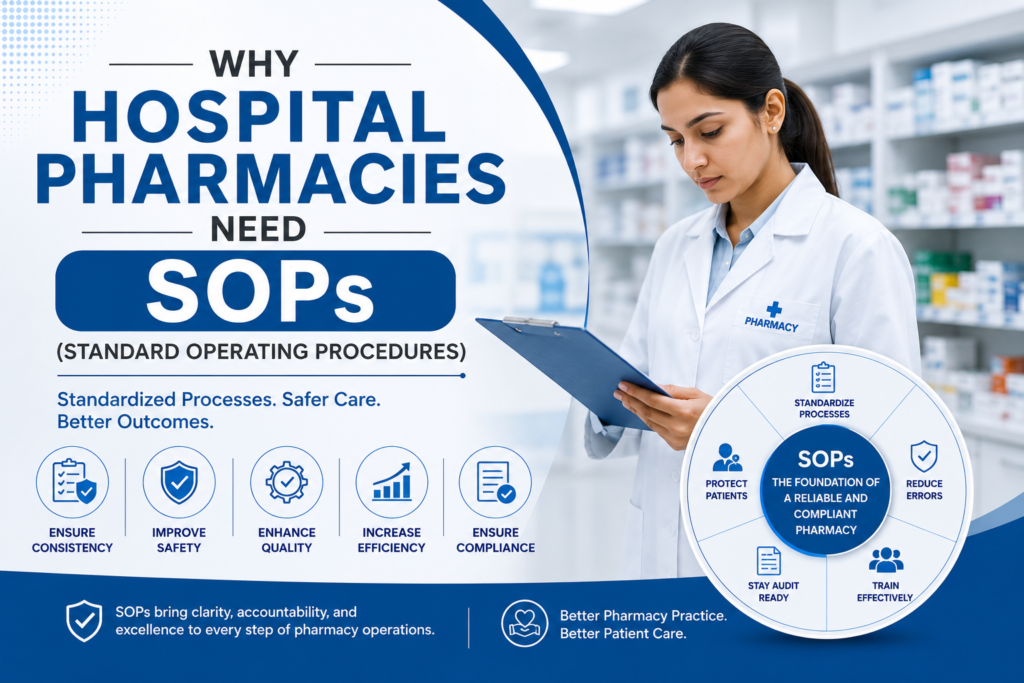
This is where Pharmacy SOPs (Standard Operating Procedures) become extremely important. Properly documented Hospital pharmacy standard procedures help create consistency, improve safety, reduce operational confusion, and ensure quality compliance across all pharmacy activities.
For hospitals associated with the Largest hospital pharmacy chain in India – Shobhit Mediworld, implementing strong SOP systems has become essential for maintaining operational excellence and patient safety.
This blog explains why Pharmacy operational SOPs are necessary and how they help hospitals improve pharmacy efficiency, compliance, and financial control.
1. SOPs Ensure Consistency and Reduce Errors
Hospital pharmacies handle hundreds or even thousands of medicines daily. Without proper SOPs, every staff member may follow different methods for dispensing, storage, or billing.
Well-designed Pharmacy operational SOPs help by:
- Creating step-by-step operational workflows
- Standardising medicine handling practices
- Reducing dependency on individuals
- Minimising human errors
- Maintaining consistency across all shifts
Consistency becomes critical in emergency situations where even a small mistake can affect patient health.
When processes are standardised, pharmacies become more organised, reliable, and easier to manage.
2. SOPs Strengthen Hospital Quality Assurance
Hospitals today must comply with NABH guidelines, healthcare regulations, and internal audit standards. Strong Hospital quality assurance pharmacy systems depend heavily on documented SOPs.
SOPs help ensure:
- Proper documentation practices
- Temperature-controlled medicine storage
- Accurate stock records
- Controlled narcotic medicine handling
- Defined accountability at every stage
Auditors and healthcare regulators consider SOP documentation as proof that the pharmacy follows professional and safe practices.
Hospitals with proper SOP implementation also perform better during inspections and compliance audits.
3. Dispensing SOPs Improve Medication Safety
Medicine dispensing is one of the most sensitive pharmacy operations. A standardized Dispensing SOP significantly reduces medication-related risks.
Without proper dispensing protocols, hospitals may face:
- Wrong medicine delivery
- Incorrect dosage dispensing
- Drug interaction issues
- Duplicate therapy errors
- Prescription interpretation mistakes
A professional Dispensing SOP generally includes:
- Prescription verification procedures
- Barcode or system-based medicine matching
- Double-checking high-risk medications
- Patient counseling instructions
- Doctor clarification protocols
These systems improve patient safety while also building trust between hospitals and patients.
4. Inventory SOPs Reduce Wastage and Stock Problems
Inventory mismanagement is one of the biggest reasons for financial leakage in hospital pharmacies. Poor stock handling often leads to expired medicines, overstocking, understocking, and inventory mismatches.
A proper Inventory SOP helps ensure:
- FEFO (First Expiry First Out) implementation
- Batch-wise stock arrangement
- Accurate inward and outward entries
- Safe storage conditions
- Timely stock replenishment
- Regular physical stock audits
Hospitals associated with the Largest hospital pharmacy chain in India – Shobhit Mediworld experience fewer inventory losses because of strict inventory SOP management systems.
Effective inventory SOPs directly improve profitability and reduce medicine wastage.
5. Billing SOPs Increase Accuracy and Compliance
Billing errors can lead to revenue loss, patient dissatisfaction, insurance rejection, and legal complications.
A structured Billing SOP helps hospitals maintain:
- Accurate GST-compliant billing
- Correct medicine mapping
- Defined refund and return procedures
- Insurance billing accuracy
- Controlled discount approval systems
- Proper narcotic drug billing documentation
Standardized billing workflows improve transparency and help prevent revenue leakage in hospital pharmacies.
Proper billing SOPs also ensure smooth integration with HIMS and pharmacy software systems.
6. Pharmacy Safety Procedures Protect Staff and Patients
Hospital pharmacies often deal with hazardous drugs, narcotics, and high-risk medicines. Proper Pharmacy safety procedures are essential to maintain workplace safety.
Safety SOPs generally include:
- Cytotoxic drug handling protocols
- Fire safety guidelines
- Spill management systems
- Safe disposal procedures
- Narcotic medicine security
- Use of PPE like gloves and masks
These procedures help reduce workplace accidents while ensuring compliance with healthcare safety standards.
A safe pharmacy environment protects both healthcare staff and patients.
7. SOPs Improve Staff Training and Onboarding
One of the biggest operational challenges in hospital pharmacies is staff turnover. New employees often take time to understand systems and workflows.
SOPs act as permanent training documents that help with:
- Faster onboarding
- Consistent training
- Reduced dependency on senior staff
- Better accountability
- Easier performance monitoring
New employees can quickly learn standard processes, reducing confusion and operational delays.
This ensures smoother pharmacy operations even during staffing changes.
8. SOPs Support Technology Integration
Modern hospital pharmacies are rapidly adopting digital systems such as:
- HIMS
- POS systems
- Barcode scanning
- Inventory software
- Automated reporting tools
Without SOPs, technology adoption often creates workflow confusion.
SOPs help define:
- Data entry standards
- System usage protocols
- Backup procedures
- User responsibilities
- Reporting formats
This improves workflow synchronization and ensures smooth digital transformation.
9. SOPs Improve Audit Readiness
Healthcare audits require accurate documentation and process transparency. Pharmacies without SOPs often struggle during inspections.
Proper SOP documentation helps hospitals maintain:
- Traceable medicine records
- Controlled purchase systems
- Defined approval workflows
- Accurate stock documentation
- Proper regulatory compliance
Audit-ready pharmacies face fewer penalties and operational risks.
10. SOPs Improve Overall Patient Satisfaction
Ultimately, every pharmacy process impacts patient experience.
When SOPs are followed correctly, patients receive:
- Faster service
- Accurate medicines
- Proper billing
- Better counselling
- Safer medication practices
This improves hospital reputation and builds long-term patient trust.
Conclusion
SOPs are not just operational documents — they are the foundation of a safe, compliant, and efficient hospital pharmacy system. From dispensing and inventory management to billing and safety protocols, SOPs help standardize every pharmacy operation.
For hospitals associated with the Largest hospital pharmacy chain in India – Shobhit Mediworld, SOP implementation ensures world-class pharmacy standards, improved patient care, fewer errors, and stronger financial performance.
A strong pharmacy always runs on strong SOPs.
Frequently Asked Questions (FAQs)
1. What are Pharmacy SOPs?
Pharmacy SOPs are written step-by-step procedures that standardize pharmacy operations and ensure consistency, safety, and compliance.
2. Why are SOPs important in hospital pharmacies?
SOPs reduce errors, improve patient safety, support audits, and create standardized workflows.
3. What is included in a Dispensing SOP?
A Dispensing SOP includes prescription verification, medicine checking, labeling, patient counseling, and safety verification steps.
4. How do Inventory SOPs help hospitals?
Inventory SOPs reduce expiry losses, stock mismatches, and medicine shortages while improving inventory accuracy.
5. What are Pharmacy safety procedures?
These are protocols related to hazardous drug handling, fire safety, spill control, PPE usage, and narcotic medicine security.
6. How do SOPs improve billing accuracy?
Billing SOPs ensure correct medicine mapping, GST compliance, refund management, and insurance billing accuracy.
7. Are SOPs necessary for NABH compliance?
Yes, SOP documentation is an important part of NABH and healthcare quality compliance requirements.
8. How do SOPs help pharmacy staff?
SOPs simplify training, improve accountability, and reduce operational confusion among pharmacy staff.
9. Can SOPs support digital pharmacy systems?
Yes, SOPs help standardize workflows for HIMS, barcode systems, POS software, and inventory tools.
10. How does Shobhit Mediworld use SOPs?
Shobhit Mediworld follows structured pharmacy SOP systems to ensure consistency, compliance, inventory control, and patient safety across hospital pharmacies.