
Contact us
We will resolve your inquiry within 24 hours.
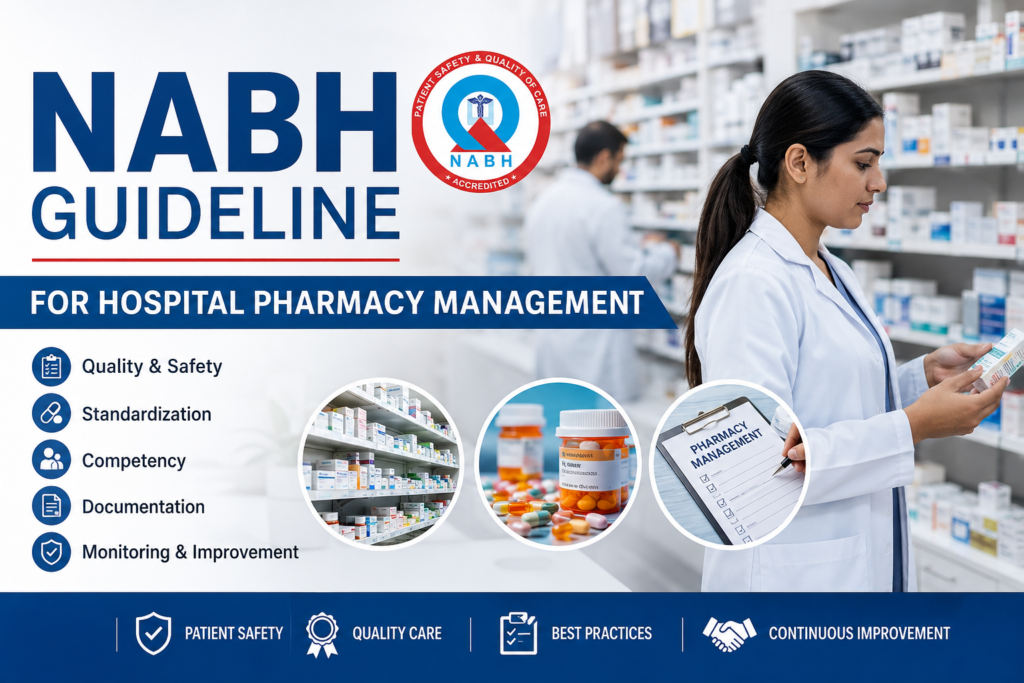
Hospital pharmacies play a critical role in healthcare delivery by ensuring safe medicine storage, accurate dispensing, inventory management, and medication safety. In India, maintaining quality standards in healthcare institutions has become increasingly important, especially for hospitals aiming to achieve accreditation and operational excellence.
One of the most recognized healthcare accreditation systems in India is the National Accreditation Board for Hospitals & Healthcare Providers (NABH). Hospitals seeking accreditation must follow strict operational and quality standards, including pharmacy management protocols.
Understanding the NABH Guidelines for Hospital Pharmacy Management is essential for hospitals looking to improve patient safety, operational efficiency, medication control, and regulatory compliance.
This blog explores the importance of NABH pharmacy standards, key compliance requirements, inventory management practices, documentation procedures, and how hospitals can prepare for NABH pharmacy audits successfully.
What is NABH?
The National Accreditation Board for Hospitals & Healthcare Providers (NABH) is a constituent board of the Quality Council of India (QCI). NABH establishes healthcare quality standards and accreditation systems for hospitals and healthcare organizations across India.
NABH accreditation focuses on:
- Patient safety
- Quality healthcare services
- Medication management
- Operational efficiency
- Infection control
- Healthcare documentation
- Continuous quality improvement
Hospitals following NABH accreditation for hospitals demonstrate commitment toward quality healthcare delivery and patient care excellence.
Importance of NABH Guidelines for Hospital Pharmacy Management
Hospital pharmacies directly impact patient safety and treatment quality. Any error in medicine storage, dispensing, procurement, or administration can create serious healthcare risks.
The NABH Guidelines for Hospital Pharmacy Management help hospitals:
- Improve medication safety
- Maintain proper inventory control
- Standardize pharmacy operations
- Reduce medicine errors
- Ensure regulatory compliance
- Improve healthcare quality standards
Following NABH pharmacy standards also improves operational transparency and hospital credibility.
Key NABH Pharmacy Standards Hospitals Must Follow
To achieve compliance, hospitals must implement proper pharmacy management systems and operational protocols.
1. Proper Medicine Storage & Inventory Management
One of the most important hospital pharmacy management guidelines is maintaining proper medicine storage conditions.
Hospitals must ensure:
- Medicines are stored at recommended temperatures
- Expiry dates are monitored regularly
- Separate storage for high-risk medicines
- Proper labeling systems
- Batch-wise inventory tracking
- Controlled drug management
Efficient inventory systems reduce medicine wastage and improve stock accuracy.
2. Medication Safety Protocols
Medication safety is a major focus area under NABH pharmacy standards.
Hospitals should implement:
- Prescription verification processes
- Double-check systems for high-risk medications
- Look-alike and sound-alike medicine identification
- Safe dispensing protocols
- Error reporting systems
Medication safety practices help minimize dispensing errors and improve patient care outcomes.
3. Pharmacy Documentation Requirements
Proper documentation is mandatory under hospital pharmacy compliance standards.
Hospitals must maintain:
- Procurement records
- Inventory logs
- Prescription records
- Dispensing records
- Controlled drug registers
- Expiry management records
- Vendor documentation
Accurate documentation supports audit readiness and operational transparency.
4. Qualified Pharmacy Staff
NABH guidelines emphasize the importance of trained and qualified pharmacy professionals.
Hospitals must ensure:
- Licensed pharmacists manage dispensing operations
- Staff receive regular training
- Pharmacy teams follow SOPs
- Competency assessments are conducted periodically
Proper staffing improves operational efficiency and medication safety.
5. Standard Operating Procedures (SOPs)
Hospitals must establish written SOPs for all pharmacy operations.
Key SOP areas include:
- Medicine procurement
- Storage management
- Dispensing procedures
- Inventory control
- Expiry handling
- Controlled drug management
- Emergency medication handling
Well-defined SOPs standardize workflows and improve compliance.

NABH Guidelines for Medicine Procurement
Efficient procurement systems are critical for maintaining medicine quality and availability.
Hospitals should:
- Purchase medicines from authorized vendors
- Verify supplier credentials
- Maintain procurement documentation
- Conduct quality checks for received medicines
- Monitor vendor performance regularly
Proper procurement management reduces the risk of counterfeit or substandard medicines entering the supply chain.
Importance of Inventory Control in NABH Hospitals
Inventory management is a key component of pharmacy management in NABH hospitals.
Effective inventory systems help:
- Prevent medicine shortages
- Reduce overstocking
- Minimize expiry losses
- Improve stock visibility
- Optimize procurement planning
Many NABH-compliant hospitals now use digital pharmacy inventory systems for real-time stock tracking and operational control.
Role of Technology in NABH Pharmacy Compliance
Technology is becoming increasingly important for healthcare compliance and pharmacy management.
Modern hospitals use:
- Pharmacy management software
- Barcode scanning systems
- Automated inventory tracking
- Digital prescription systems
- Expiry alert systems
- Audit reporting dashboards
Digital systems improve operational accuracy and simplify compliance management.
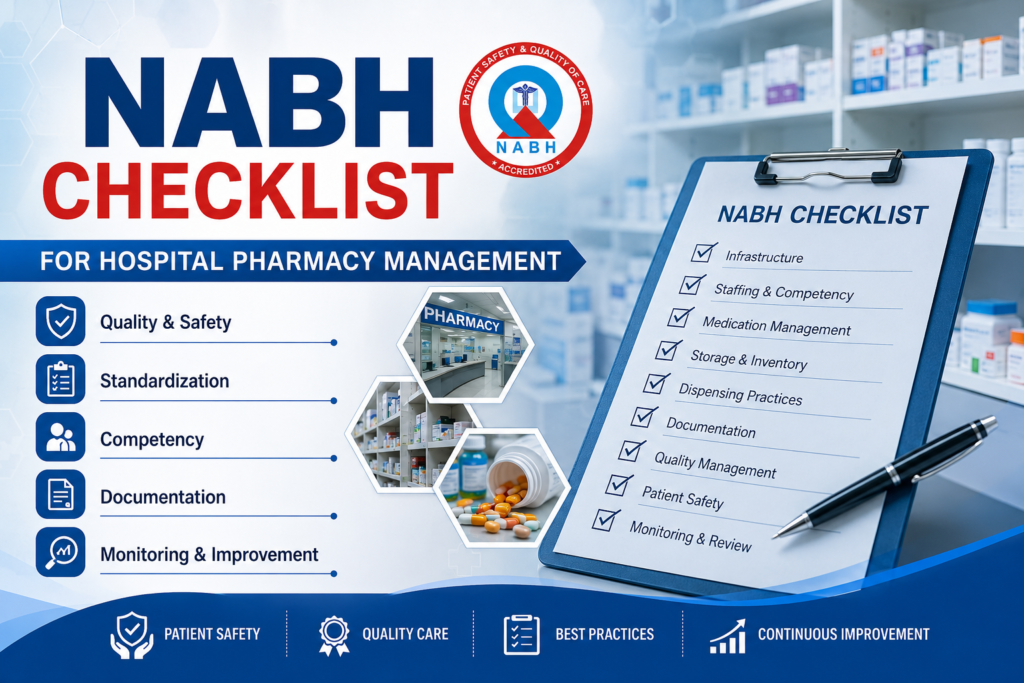
NABH Pharmacy Audit Checklist
Hospitals preparing for NABH audits should regularly evaluate pharmacy operations using a structured compliance checklist.
A typical NABH pharmacy audit checklist includes:
Storage & Inventory
- Proper medicine storage conditions
- Temperature monitoring records
- Batch and expiry tracking
- Controlled drug storage compliance
Documentation
- Updated inventory records
- Procurement documentation
- Dispensing logs
- SOP documentation
Medication Safety
- Error reporting systems
- High-risk medication identification
- Prescription verification procedures
Staffing & Training
- Pharmacist qualifications
- Staff training records
- Competency evaluation systems
Compliance & Quality
- Internal audits
- Corrective action records
- Quality improvement initiatives
Regular internal audits help hospitals maintain continuous compliance and audit readiness.
Common Challenges in NABH Pharmacy Compliance
Many hospitals face operational challenges while implementing NABH pharmacy standards.
Manual Inventory Systems
Traditional inventory methods often create:
- Stock inaccuracies
- Expiry management issues
- Documentation gaps
Staff Training Gaps
Lack of regular training can impact SOP compliance and medication safety.
Documentation Complexity
Maintaining large volumes of pharmacy records manually can become difficult.
Operational Standardization
Ensuring consistent compliance across departments requires strong operational control.
Benefits of NABH-Compliant Pharmacy Management
Implementing NABH pharmacy standards provides several long-term benefits.
Improved Patient Safety
Medication safety protocols reduce dispensing errors and healthcare risks.
Better Inventory Management
Efficient inventory systems improve medicine availability and reduce wastage.
Enhanced Operational Efficiency
Standardized workflows improve pharmacy productivity and operational control.
Increased Hospital Credibility
NABH accreditation improves hospital reputation and patient trust.
Better Regulatory Compliance
Hospitals maintain compliance with healthcare quality and safety standards.
Future of Hospital Pharmacy Management
The future of hospital pharmacy management is becoming more digital and automation-driven.
Healthcare organizations are increasingly adopting:
- AI-based inventory forecasting
- Smart pharmacy automation
- Cloud-based pharmacy systems
- Digital compliance monitoring
- Predictive analytics dashboards
Technology-driven pharmacy management will continue improving operational efficiency and patient care quality.
Conclusion
Understanding and implementing the NABH Guidelines for Hospital Pharmacy Management is essential for hospitals aiming to achieve operational excellence, medication safety, and healthcare quality standards.
From inventory management and medication safety to documentation and compliance audits, NABH pharmacy standards help hospitals create safer and more efficient healthcare environments.
By adopting modern pharmacy management systems, standardized workflows, and strong compliance practices, hospitals can improve operational efficiency, reduce medication risks, and successfully maintain NABH accreditation standards.
FAQs – NABH Guidelines for Hospital Pharmacy Management
1. What are NABH guidelines for hospital pharmacy management?
These are healthcare quality standards designed to improve medication safety, pharmacy operations, inventory management, and compliance in hospitals.
2. Why are NABH pharmacy standards important?
NABH pharmacy standards help improve patient safety, operational efficiency, medicine management, and healthcare quality.
3. What is included in NABH pharmacy compliance?
Compliance includes:
- Medicine storage protocols
- Inventory management
- Medication safety
- Documentation systems
- SOP implementation
- Qualified pharmacy staffing
4. What is a NABH pharmacy audit checklist?
A NABH pharmacy audit checklist evaluates pharmacy operations, inventory control, documentation, medication safety, and compliance readiness.
5. How does inventory management help NABH compliance?
Efficient inventory systems improve stock accuracy, reduce expiry losses, and support operational transparency.
6. What role does technology play in NABH pharmacy management?
Technology improves:
- Inventory tracking
- Documentation management
- Audit reporting
- Medication safety
- Operational accuracy
7. Why are SOPs important in hospital pharmacy management?
SOPs standardize workflows, improve compliance, and reduce operational errors.
8. What are common challenges in NABH pharmacy compliance?
Common challenges include manual documentation, inventory inaccuracies, staff training gaps, and operational standardization issues.
9. How can hospitals prepare for NABH pharmacy audits?
Hospitals should conduct internal audits, maintain updated documentation, train staff regularly, and implement standardized pharmacy procedures.
10. What are the benefits of NABH accreditation for hospitals?
Benefits include improved healthcare quality, patient safety, operational efficiency, regulatory compliance, and hospital credibility.