
Contact us
We will resolve your inquiry within 24 hours.

Modern hospitals face increasing pressure to manage patient care, maintain operational efficiency, reduce costs, and comply with strict healthcare regulations. One of the most challenging areas in hospital operations is pharmacy management. Managing a hospital pharmacy requires constant monitoring of medicine inventory, billing, regulatory compliance, audits, staffing, and patient safety protocols.
Many hospitals struggle with rising operational pressure, inventory losses, compliance issues, and manpower shortages. This is why Hospital Pharmacy Outsourcing is becoming a preferred solution for healthcare institutions looking for effective Hospital Workload Reduction and better compliance management.
Outsourcing pharmacy operations allows hospitals to focus more on patient care while experienced pharmacy management providers handle inventory, staffing, compliance, and operational responsibilities.
What is Hospital Pharmacy Outsourcing?
Hospital Pharmacy Outsourcing refers to partnering with a professional pharmacy management company that handles hospital pharmacy operations on behalf of the hospital.
The outsourcing provider may manage:
- Medicine procurement
- Inventory management
- Pharmacy staffing
- Billing operations
- Compliance management
- Drug license monitoring
- Expiry control
- Pharmacy audits
- Regulatory documentation
This model helps hospitals improve operational efficiency while reducing administrative burden.
Why Hospitals Face Pharmacy Management Challenges
Hospital pharmacies are highly sensitive operational units because they directly impact patient treatment and hospital revenue.
Common challenges include:
- Medicine shortages
- Expiry losses
- Billing errors
- Inventory mismatch
- Staff management issues
- Audit pressure
- Regulatory non-compliance
- Poor documentation
- Revenue leakage
Managing these responsibilities internally can increase Operational Risk in Hospital Pharmacies.
How Pharmacy Outsourcing Helps in Hospital Workload Reduction
One of the biggest benefits of outsourcing is significant Hospital Workload Reduction.
Hospitals already manage:
- Patient admissions
- Emergency care
- Clinical operations
- Doctor coordination
- Insurance processing
- Administrative tasks
Handling pharmacy operations separately adds additional stress to management teams.
By outsourcing pharmacy services, hospitals can reduce:
- Administrative workload
- Inventory monitoring pressure
- Compliance management burden
- Staff supervision responsibilities
- Procurement complexity
This allows hospital administrators to focus more on core healthcare services.
Better Inventory Management Through Outsourcing
Inventory control is one of the most difficult pharmacy responsibilities.
Outsourcing providers use advanced pharmacy systems for:
- Real-time inventory tracking
- Expiry monitoring
- Batch tracking
- Stock optimization
- Vendor management
- Demand forecasting
This improves operational efficiency and reduces medicine wastage.
Proper inventory management also minimizes Operational Risk in Hospital Pharmacies caused by stock shortages or expired medicines.
Reducing Pharmacy Compliance Risks
Healthcare regulations in India are becoming stricter every year. Hospitals must maintain proper pharmacy documentation and operational standards to avoid legal issues and penalties.
Outsourcing providers help reduce Pharmacy Compliance Risks by ensuring:
- Proper record maintenance
- Accurate inventory documentation
- Controlled medicine dispensing
- Compliance with pharmacy laws
- Standardized pharmacy operations
Professional pharmacy management teams are trained to follow regulatory protocols accurately.
Support for Drug License Compliance
Maintaining Drug License Compliance is mandatory for every hospital pharmacy.
Hospitals must ensure:
- Proper storage conditions
- Authorised medicine dispensing
- Accurate purchase records
- Controlled substance management
- Updated documentation
Failure to maintain compliance can result in:
- Legal penalties
- License suspension
- Audit issues
- Reputation damage
Pharmacy outsourcing companies help hospitals maintain all required compliance procedures systematically.
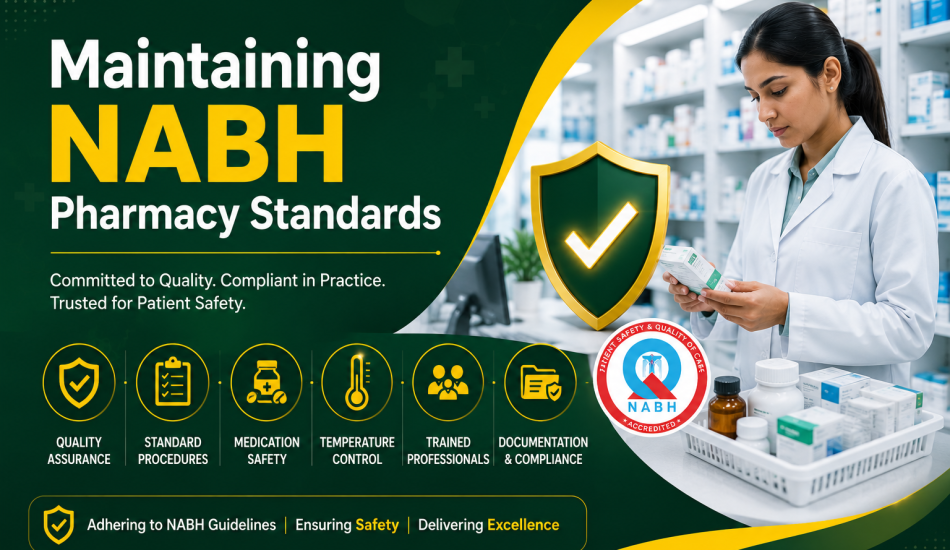
Maintaining NABH Pharmacy Standards
Hospitals seeking NABH accreditation must follow strict pharmacy management standards.
NABH Pharmacy Standards require hospitals to maintain:
- Safe medicine storage
- Expiry monitoring
- Prescription management
- Inventory control
- Documentation accuracy
- Medication safety protocols
Outsourcing providers often have dedicated compliance teams that ensure NABH-ready pharmacy operations.
This improves hospital accreditation readiness and operational quality.
Improving Pharmacy Audit Readiness
Hospital pharmacies frequently undergo:
- Internal audits
- NABH inspections
- Regulatory inspections
- Drug authority audits
Manual systems often create documentation gaps and compliance errors.
Professional outsourcing providers improve Pharmacy Audit Readiness through:
- Digital record management
- Standard operating procedures
- Inventory transparency
- Proper documentation
- Regular compliance checks
This reduces audit stress and operational disruptions.
Regulatory Risk Reduction in Hospitals
Healthcare organizations face strict regulatory requirements related to:
- Pharmacy operations
- Drug handling
- Patient safety
- Medicine storage
- Controlled substances
Non-compliance can create serious Regulatory Risk Reduction in Hospitals challenges.
Pharmacy outsourcing helps reduce these risks through:
- Process standardization
- Regulatory monitoring
- Continuous documentation
- Staff training
- Automated inventory systems
This improves overall healthcare compliance management.
Better Technology and Automation
Most professional pharmacy outsourcing companies use advanced technology solutions such as:
- Hospital Management Systems (HMS)
- Pharmacy Management Software
- Barcode tracking
- Automated billing
- Expiry alert systems
- Inventory analytics
Technology improves operational accuracy and reduces human errors significantly.
Cost Efficiency and Revenue Control
Outsourcing also improves financial efficiency.
Hospitals can reduce costs related to:
- Pharmacy staffing
- Inventory losses
- Expired medicines
- System management
- Compliance penalties
Better inventory control and billing accuracy also help reduce revenue leakage.
Improved Patient Care
Efficient pharmacy operations directly impact patient care.
Outsourcing helps hospitals ensure:
- Faster medicine dispensing
- Better medicine availability
- Reduced treatment delays
- Improved patient safety
- Better emergency preparedness
This enhances overall patient satisfaction.
Challenges Hospitals Can Avoid Through Outsourcing
With professional pharmacy outsourcing, hospitals can reduce:
- Compliance pressure
- Audit failures
- Staff shortages
- Inventory mismatch
- Expiry losses
- Billing errors
- Operational inefficiencies
This creates a smoother and more organized healthcare environment.
Why More Hospitals Are Choosing Pharmacy Outsourcing
The healthcare industry is becoming more complex, competitive, and compliance-focused.
Hospitals are increasingly adopting outsourcing models because they offer:
- Operational efficiency
- Compliance support
- Cost control
- Technology integration
- Better inventory management
- Improved audit readiness
Outsourcing also allows hospitals to scale pharmacy operations more efficiently.
Conclusion
Hospital pharmacy management is a highly sensitive and operationally demanding function. Managing inventory, compliance, audits, staffing, and medicine safety internally can increase administrative burden and regulatory risks for hospitals.
Hospital Pharmacy Outsourcing helps healthcare organizations achieve effective Hospital Workload Reduction, improve Healthcare Compliance Management, reduce Pharmacy Compliance Risks, and maintain proper Drug License Compliance and NABH Pharmacy Standards.
By improving inventory control, pharmacy audit readiness, operational efficiency, and regulatory management, outsourcing creates a more streamlined and patient-focused healthcare environment.
For hospitals aiming to reduce operational stress, improve compliance, and strengthen pharmacy performance, professional pharmacy outsourcing has become a smart and sustainable solution.
FAQs
1. What is hospital pharmacy outsourcing?
Hospital pharmacy outsourcing is the process of hiring a professional company to manage pharmacy operations such as inventory, staffing, billing, and compliance.
2. How does pharmacy outsourcing reduce hospital workload?
It reduces administrative burden by handling inventory management, compliance, staffing, audits, and pharmacy operations externally.
3. How does outsourcing help with pharmacy compliance risks?
Professional providers follow regulatory standards, maintain documentation, and ensure proper pharmacy procedures to reduce compliance risks.
4. What are NABH pharmacy standards?
NABH pharmacy standards are quality and safety guidelines hospitals must follow for pharmacy operations and medication management.
5. Can pharmacy outsourcing improve audit readiness?
Yes, outsourcing companies maintain organized digital records and compliance documentation that improve pharmacy audit readiness.
6. How does outsourcing help in inventory management?
It improves inventory tracking, expiry monitoring, stock optimization, and procurement efficiency using advanced pharmacy systems.
7. What is drug license compliance in hospitals?
Drug license compliance refers to following legal pharmacy regulations related to medicine storage, dispensing, and documentation.
8. Does outsourcing reduce medicine expiry losses?
Yes, professional inventory monitoring and expiry tracking help reduce medicine wastage and expiry-related financial losses.
9. How does outsourcing improve patient care?
Efficient pharmacy operations ensure faster medicine availability, reduced delays, and better medication safety for patients.
10. Why are hospitals choosing pharmacy outsourcing today?
Hospitals choose outsourcing for better operational efficiency, regulatory support, technology integration, and reduced administrative stress.