
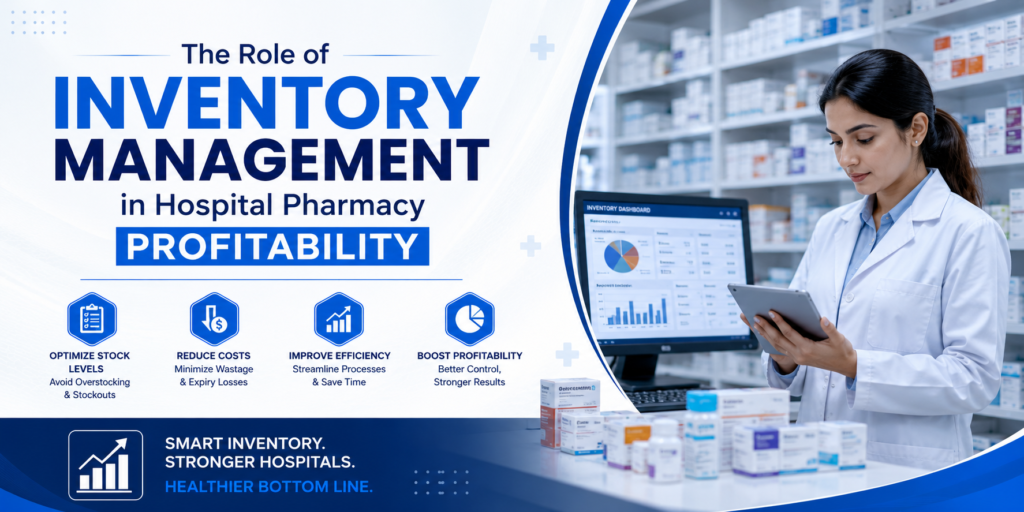
The Role of Inventory Management in Hospital Pharmacy Profitability
Introduction
In hospital operations, the pharmacy is one of the highest-impact departments—directly affecting revenue, patient safety, and clinical efficiency. Despite this, many hospitals still overlook the importance of structured pharmacy inventory management, resulting in stock-outs, expired medicines, capital blockage, and operational disruptions.
Effective hospital pharmacy stock control is not just about keeping the shelves full. It ensures the right medicine is available at the right time, in the right quantity, with minimal wastage.
As the Largest hospital pharmacy chain in India – Shobhit Mediworld, SMW has implemented advanced inventory systems across multiple units, demonstrating how optimized stock management can significantly improve profitability and patient satisfaction.
This blog explores how hospitals can strengthen profitability through disciplined inventory optimization, procurement planning, and tech-enabled forecasting.
1. Why Inventory Management Is Critical for Hospital Pharmacies
Hospital pharmacies handle thousands of SKUs, all with different expiry timelines and demand patterns. Without structured processes, challenges arise:
- Stock-outs affecting IPD/OPD patient care
- Overstocking leading to blocked working capital
- High expiry losses
- Emergency purchases at premium rates
- Weak vendor negotiations
Efficient inventory optimization in healthcare enables hospitals to maintain availability while avoiding unnecessary costs. SMW’s experience shows that disciplined systems can increase pharmacy profitability by 15–30%.
2. Accurate Stock Visibility for Better Decision-Making
Many hospitals still rely on manual or semi-digital spreadsheets. This leads to:
- Sudden shortages in fast-movers
- Accumulation of slow-moving items
- Unnoticed expiry risks
- Unpredictable procurement cycles
A real-time digital system improves inventory accuracy improvement, offering visibility into:
- Current stock balance
- Consumption rates
- Upcoming expiries
- Pending purchase orders
Shobhit Mediworld’s multi-store ecosystem demonstrates how real-time visibility sharpens decision-making and prevents losses.
3. Reducing Losses Through Strong Expiry Loss Prevention
Expiry losses are one of the biggest drains on pharmacy profitability. Common causes include:
- Overstocking
- Poor shelf rotation
- Weak alert systems
- No tracking of near-expiry returns
Key expiry loss prevention methods include:
- FEFO (First Expiry, First Out) practices
- Automated expiry alerts
- Weekly shelf audits
- Vendor return agreements
Hospitals adopting these observe a 40–60% drop in expiry-related losses—something SMW has already achieved across its network.
4. Smarter Stock Prioritization with ABC-VED Analysis
ABC-VED analysis for pharmacy helps categorize medicines based on consumption Supply and criticality:
ABC Analysis (Supply-based):
- A – High-Supply items
- B – Medium-Supply
- C – Low-Supply
VED Analysis (Criticality-based):
- V – Vital
- E – Essential
- D – Desirable
Combined ABC-VED enables:
- Strict control on A+V items
- Regular review for B+E items
- Flexible ordering for C+D items
This ensures optimized stock while minimizing financial risk—an approach used in all SMW hospital units.
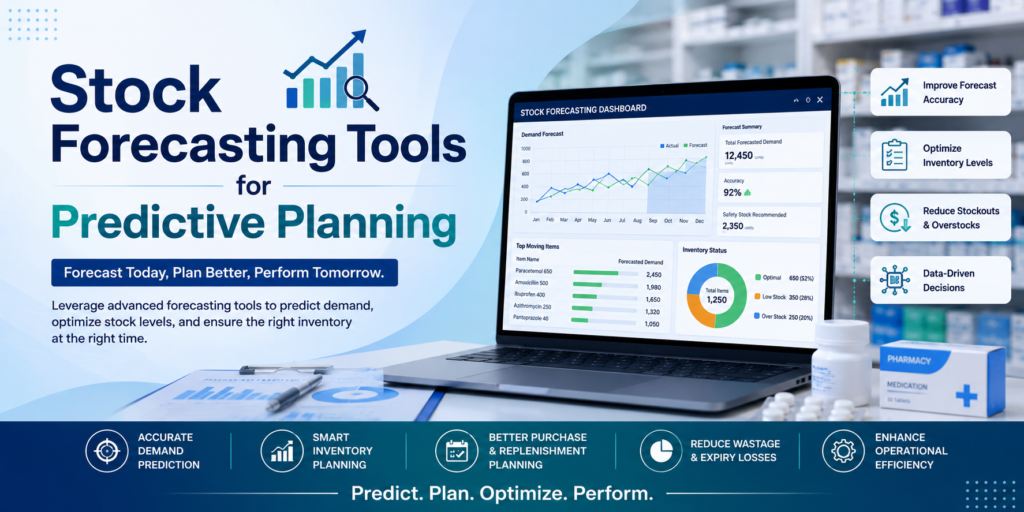
5. Stock Forecasting Tools for Predictive Planning
Accurate forecasting is crucial due to seasonal variations, doctor prescriptions, and specialty treatments. Modern stock forecasting tools use:
- Historical consumption
- Seasonal disease trends
- OPD/IPD traffic
- Lead times
- Doctor prescribing patterns
Predictive tools reduce emergency purchases and ensure uninterrupted patient services.
6. Strengthening Hospital Purchase Management
Strong hospital purchase management is key to maintaining pharmacy profitability. This includes:
- Vendor evaluation & negotiation
- Competitive rate comparison
- Delivery timeline checks
- Supplier scoring
- Quality checks for authenticity
Procurement inefficiencies directly impact revenue. SMW follows a centralized procurement model that ensures competitive pricing and consistent supply.
7. Enhancing Pharmacy Procurement Management
Effective pharmacy procurement management helps maintain:
- Optimal purchase quantities
- Reduced carrying cost
- Strong vendor relationships
- Timely replenishments
- High availability of essential medicines
The result—better patient satisfaction and improved profitability.
8. Technology’s Impact on Inventory Optimization
Modern systems integrated with HIMS/MIS support automated:
- Stock reconciliation
- PO generation
- Expiry and low-stock alerts
- Demand forecasting
- Supplier analytics
Hospitals that adopt tech-driven inventory optimization in healthcare see:
- Higher accuracy
- Lower wastage
- Faster operations
- Better financial performance
This tech-first approach is a core practice used across Shobhit Mediworld’s pharmacy network.
Conclusion
For hospitals aiming to improve financial stability and patient outcomes, strengthening pharmacy inventory management is essential. With structured stock control, forecasting tools, disciplined procurement, and tech-enabled visibility, pharmacies reduce wastage, cut costs, and improve overall profitability.
At the Largest hospital pharmacy chain in India – Shobhit Mediworld, these practices have transformed pharmacy operations across multiple hospitals—proving that inventory is not just stock, but the backbone of pharmacy profitability.